

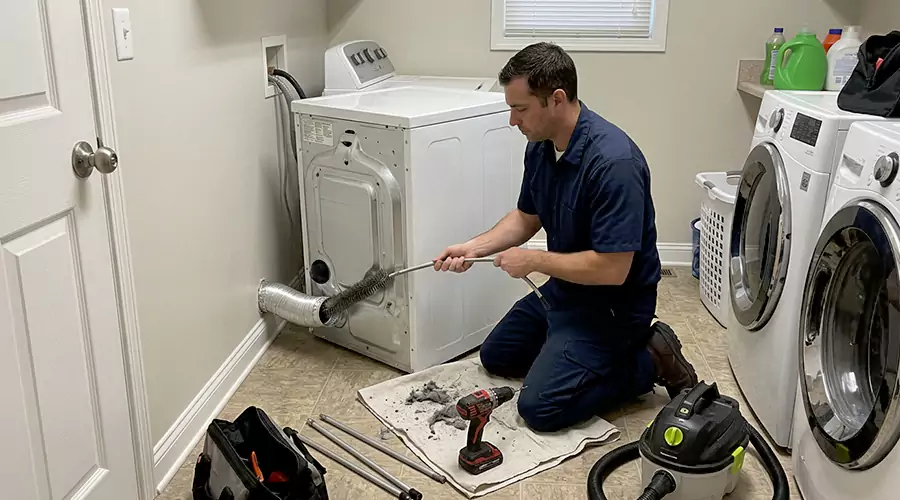
To prevent lint buildup in dryer vents, clean the lint screen after every load, maintain a short and properly installed metal exhaust duct, inspect the outdoor vent regularly, and schedule professional dryer vent cleaning at least once a year. These practices help maintain airflow, reduce drying times, and lower the risk associated with accumulated combustible lint. Professional air duct cleaning service can also remove accumulated dust and debris from HVAC ductwork to help maintain clean airflow throughout the building.
Every time a clothes dryer operates, small fibers separate from clothing, towels, and bedding. These fibers become lint, which the dryer collects through its removable lint screen. Although the filter captures much of the material, some particles can pass through and collect inside the exhaust duct. Over time, deposits may restrict airflow and prevent warm, humid air from leaving efficiently.
Lint buildup is particularly concerning because it can contribute to overheating. The U.S. Fire Administration identifies failure to clean as a major factor in residential dryer fires. Understanding how to prevent excessive lint accumulation helps homeowners maintain drying performance and recognize when professional service is necessary.
Why Does Lint Build Up in Dryer Vents?
Lint forms naturally when fabrics rub against each other during washing and drying. The amount released depends on fabric type, load size, and how frequently the dryer operates. A properly fitted lint screen captures much of this material, but it cannot prevent every particle from entering the exhaust system. Several conditions can contribute to faster accumulation.
| Cause | How It Contributes to Lint Buildup |
|---|---|
| Dirty lint screen | Restricts normal airflow |
| Long exhaust duct | Creates a longer path for lint deposits |
| Excessive elbows | Adds resistance and collection points |
| Crushed transition duct | Restricts airflow and traps material |
| Improper foil or plastic duct | Can collapse or develop restrictive folds |
| Blocked exterior hood | Prevents exhaust from leaving freely |
| Heavy dryer usage | Produces more lint over time |
| Pet hair on laundry | Adds material to lint deposits |
Not every home accumulates lint at the same rate. The condition and design of the exhaust system influence how frequently cleaning is needed.
1. Clean the Dryer Lint Screen After Every Load
The lint screen is the first line of protection against excessive material entering the exhaust duct. The U.S. Fire Administration recommends cleaning the filter before and after each drying cycle. Removing lint regularly helps air move through the appliance.
Take the screen out and remove the collected fibers according to the manufacturer's instructions. Never operate a conventional dryer without its lint filter installed. The missing filter allows more material to enter internal passages and the exhaust system.
2. Remove Fabric Softener Residue From the Filter
Some dryer sheets and fabric-softening products can leave residue on the lint screen. Whirlpool explains that this buildup may not always be visible. Even when the screen looks clean, residue can interfere with airflow.
Inspect the filter periodically and clean it using the method recommended by the appliance manufacturer. Allow the screen to dry fully before reinstalling it if washing is permitted. Avoid using harsh cleaning products that could damage the filter material.
3. Use Proper Metal Dryer Vent Ducting
Duct material has a major effect on how easily lint can accumulate. Smooth metal ducts provide a more suitable permanent exhaust passage than plastic hoses or lightweight foil accordion materials. The 2024 International Residential Code generally requires permanent residential dryer exhaust ducts to be constructed from smooth metal with a nominal four-inch diameter.
The short appliance connection should use an appropriate listed metal transition duct. Avoid ordinary flexible HVAC ducts because they are not designed for conventional dryer exhaust installations.
4. Keep the Exhaust Route Short and Straight
Long ducts and multiple elbows create additional resistance. Whirlpool recommends using the shortest practical exhaust route with as few bends as possible. An unnecessarily complicated passage can contribute to slower drying and additional lint accumulation.
When planning a new installation, choose a suitable exterior termination that minimizes duct length while meeting building and manufacturer requirements. Do not exceed the permitted equivalent duct length. A contractor should account for both straight sections and elbows.
5. Prevent the Vent Hose From Becoming Crushed
The transition duct behind the dryer can become flattened when the appliance is pushed against the wall. A crushed section limits exhaust airflow and can contribute to lint buildup. Inspect the visible connection periodically, particularly after moving the dryer for cleaning or maintenance.
The transition should retain its intended diameter without tight bends. An approved recessed or low-profile connection may help when space behind the appliance is limited.
6. Keep the Exterior Dryer Vent Clear
The outside termination allows warm, humid air to leave the house. Lint, leaves, nesting materials, or damaged dampers can obstruct this opening.The U.S. Fire Administration recommends checking that the outdoor vent covering opens when the dryer operates.
Inspect the accessible outlet periodically. Remove obvious external debris only when it can be done safely. Do not install a screen over the termination because screens can trap lint and restrict airflow.
7. Avoid Overloading the Dryer
Clothing needs enough space to tumble so heated air can pass through the load. Overloading can interfere with moisture removal and increase drying time.
Follow the appliance manufacturer's load recommendations. Dry heavy towels and bulky bedding using suitable settings. An overloaded drum does not automatically clog the vent, but inefficient drying can extend operating time and contribute to ongoing lint production.
8. Remove Excess Pet Hair From Laundry
Pet bedding, blankets, and clothing can carry loose hair into the dryer. Whirlpool identifies pet hair as one factor affecting vent maintenance needs. Remove excessive hair from heavily covered fabrics before washing when practical.
Regular grooming and cleaning of pet bedding can also reduce the amount of loose material entering the laundry process. Households with multiple shedding pets may benefit from more frequent vent inspection.
9. Schedule Annual Dryer Vent Cleaning
The U.S. Fire Administration recommends cleaning dryer vent ductwork annually. Professional cleaning removes accumulated lint from passages that may not be accessible using ordinary household tools.
A technician can also inspect the exhaust route for crushed sections, loose joints, and blocked exterior outlets. Some systems need additional attention because of heavy usage or complicated duct layouts. Do not wait for the annual appointment when drying performance becomes noticeably worse.
10. Inspect the Area Behind the Dryer
Lint can collect behind the appliance, especially near the exhaust connection. The U.S. Fire Administration recommends removing lint from this area and checking the vent for damage or restrictions. Keep the surrounding space free of boxes, clothing, paper, and other combustible clutter.
When the dryer must be moved, take care not to damage electrical, water, or gas connections. Gas dryer servicing and any work affecting gas piping should be performed by qualified personnel.
How Do You Know if Lint Is Blocking the Dryer Vent?
A developing blockage may produce several warning signs.
Common symptoms include:
- Clothes taking longer than usual to dry.
- Laundry remaining damp after a complete cycle.
- The dryer becoming unusually hot.
- Weak airflow at the outdoor exhaust.
- Lint collecting around the vent hood.
- The exterior damper failing to open normally.
- Restricted-airflow warning messages.
- Moisture collecting near the appliance.
If the dryer produces a burning odor or smoke, stop using it immediately.
A qualified technician should investigate persistent airflow problems rather than repeatedly running additional drying cycles.
Can You Clean Dryer Vent Lint Yourself?
Homeowners can clean the removable lint screen and maintain accessible surfaces around the dryer. Some short and uncomplicated exhaust passages can also be cleaned using appropriate tools.
However, concealed, roof-terminated, or unusually long vents can be difficult to clean completely. Improper cleaning tools may disconnect duct sections or leave obstructions inside. Professional AC vent repair can help correct damaged or disconnected HVAC vents and restore proper airflow when ductwork problems affect system performance.
Professional cleaning is recommended when the route is difficult to access or airflow problems continue. A cleaner should inspect the duct's condition and verify that the exhaust pathway is properly connected afterward.
What Should You Avoid When Preventing Lint Buildup?
Certain shortcuts can create additional restrictions. Avoid installing mesh screens at the exterior termination, using plastic exhaust hoses, or concealing an ordinary flexible appliance transition inside a wall. Do not rely on a secondary indoor lint trap as a substitute for a properly vented conventional dryer.
Do not install an ordinary ventilation booster fan in the exhaust passage. Only specifically approved dryer exhaust power-ventilator systems may be used where permitted. The system should always follow the dryer manufacturer's instructions and applicable mechanical codes.
Does Regular Vent Cleaning Improve Dryer Efficiency?
Cleaning can improve performance when lint buildup is restricting airflow. Whirlpool explains that restricted venting can increase drying time and energy consumption. Removing an obstruction may help the dryer return to normal operation.
However, a clean exhaust duct cannot correct every appliance problem. Heating element failures, sensors, and other mechanical faults require separate diagnosis. Maintaining the exhaust system is one part of overall dryer care.
Conclusion
Preventing lint buildup in dryer vents requires consistent filter cleaning, proper metal duct installation, and regular exhaust maintenance. Keep the vent route short, inspect the exterior termination, and prevent the appliance connection from becoming crushed. Annual professional cleaning helps remove deposits that ordinary filter maintenance cannot reach. Address longer drying times, excessive heat, and airflow warnings promptly. These practices help maintain dryer performance and reduce preventable fire hazards.